Table of Contents
In today’s digital landscape, understanding the various types of VPNs is crucial for individuals and businesses alike. A Virtual Private Network (VPN) serves as a secure tunnel for data transmission, protecting sensitive information from prying eyes. This article will explore the distinct categories of VPNs, detailing their functionalities, advantages, and ideal use cases. Whether you are a remote worker, a business owner, or simply someone concerned about online privacy, grasping these concepts is essential for making informed decisions regarding your digital security.
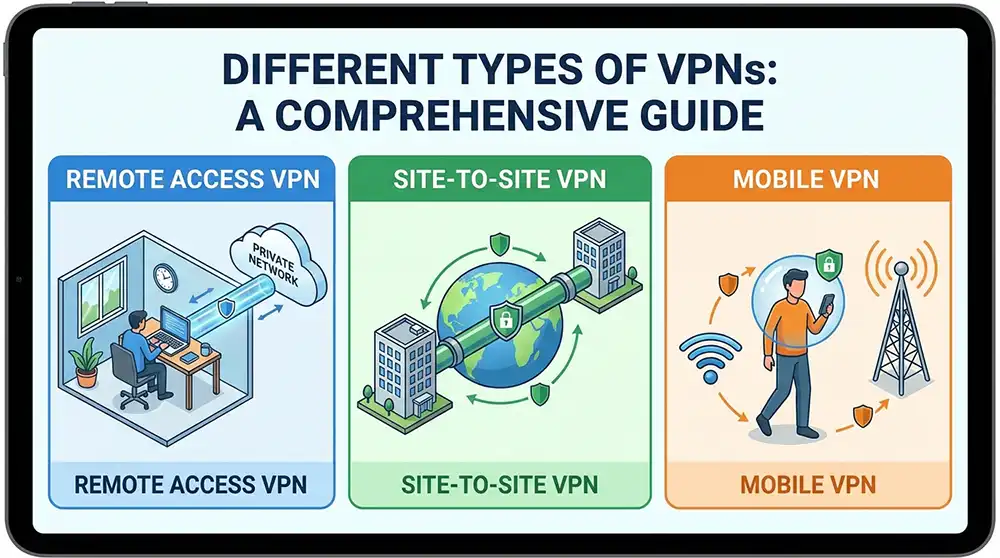
VPNs can be broadly classified into several categories, each tailored to meet specific needs. The primary types include:
- Remote Access VPN: This type allows users to connect to a private network from a remote location, facilitating secure access to resources.
- Site-to-Site VPN: Often used by businesses, this configuration connects entire networks, enabling secure communication between different office locations.
- Mobile VPN: Designed for mobile devices, this variant maintains a secure connection even when the user switches networks.
Understanding these categories not only enhances your knowledge of online security but also empowers you to choose the right solution for your needs. For further insights into related topics, consider exploring 8 Important DNS Record Types You Must Know (and Why They Matter).
As we delve deeper into the specifics of each VPN type, it is important to recognize their roles in safeguarding data and maintaining privacy. For a foundational understanding of what a VPN is, refer to our comprehensive guide on the VPN definition. By familiarizing yourself with these concepts, you will be better equipped to navigate the complexities of online security.
Read more: Source
What is a VPN?
A Virtual Private Network (VPN) is a technology that creates a secure and encrypted connection over a less secure network, such as the Internet. VPNs are essential for protecting sensitive data and ensuring privacy while online. They serve various purposes, including safeguarding personal information, bypassing geo-restrictions, and enhancing security for remote workers. Understanding the fundamental aspects of VPNs is crucial, especially when considering the different types of VPNs available.
Definition of a VPN
A VPN functions by establishing a private network from a public internet connection. This allows users to send and receive data as if their devices were directly connected to a private network. Key characteristics include:
- Encryption: VPNs encrypt data, making it unreadable to unauthorized users.
- Anonymity: By masking the user’s IP address, VPNs enhance online anonymity.
- Access Control: VPNs can restrict access to specific resources based on user credentials.
How VPNs Work
VPNs operate by routing your internet connection through a secure server, which acts as an intermediary between your device and the internet. The process involves several steps:
1. Connection Initiation: The user connects to a VPN server using VPN client software. 2. Authentication: The user’s credentials are verified to ensure authorized access. 3. Data Encryption: Data is encrypted before it leaves the user’s device, ensuring privacy. 4. Tunneling Protocols: Various protocols (like OpenVPN, L2TP, and PPTP) are used to create a secure tunnel for data transmission. 5. Data Transmission: Encrypted data travels through the tunnel to the VPN server, where it is decrypted and sent to the intended destination.
This process not only secures data but also allows users to access restricted content by masking their geographical location. For a deeper dive into the technical aspects of VPNs, consider exploring Source. Understanding how VPNs work lays the groundwork for exploring the various types available and their specific applications in enhancing online security.
Check out our guide on 7 Powerful Uses of the nslookup Command in Linux (Complete Guide)
Why Use a VPN?
Utilizing a Virtual Private Network (VPN) offers numerous advantages, particularly in an era where online privacy and security are paramount. By employing a VPN, users can safeguard their data and maintain anonymity while navigating the internet. This section delves into the benefits of using a VPN and highlights common scenarios where VPNs prove invaluable.
Benefits of Using a VPN
The primary advantages of employing a VPN include:
- Enhanced Security: VPNs encrypt data, making it nearly impossible for hackers or unauthorized entities to intercept sensitive information.
- Privacy Protection: By masking the user’s IP address, VPNs help maintain anonymity, preventing tracking by websites and advertisers.
- Access to Restricted Content: VPNs enable users to bypass geographical restrictions, allowing access to content that may be blocked in certain regions.
- Safe Public Wi-Fi Usage: When connected to public networks, a VPN provides an additional layer of security, protecting users from potential threats.
- Improved Online Experience: VPNs can reduce latency and improve connection speeds, particularly when accessing content from distant servers.
Common Use Cases
VPNs cater to a variety of needs, making them versatile tools for different users:
- Remote Work: Employees can securely access company resources from anywhere, ensuring data integrity and confidentiality.
- Streaming Services: Users can enjoy a broader range of content by connecting to servers in different countries, circumventing regional restrictions.
- Online Gaming: Gamers can reduce lag and access geo-blocked games or servers, enhancing their overall gaming experience.
- Torrenting: VPNs provide anonymity for users downloading or sharing files, protecting them from potential legal repercussions.
- Travel: Travelers can maintain access to their home services and content while abroad, ensuring continuity in their online activities.
In summary, the use of a VPN is essential for anyone seeking to enhance their online security and privacy. By understanding the benefits and common use cases, users can make informed decisions about which type of VPN best suits their needs. For further insights into the technical aspects of VPNs, consider exploring What Is the Ping Command? 7 Powerful Insights for Beginners.
Read more: Source
Types of VPNs
Understanding the various categories of virtual private networks (VPNs) is crucial for selecting the right solution tailored to specific needs. Each type serves distinct purposes and offers unique functionalities.
Remote Access VPN
A Remote Access VPN allows individual users to connect securely to a private network from a remote location. This type is particularly beneficial for employees working from home or traveling, as it enables them to access company resources securely. Key features include:
- Encryption: Protects data transmitted over the internet.
- User Authentication: Ensures that only authorized users can access the network.
- Compatibility: Works on various devices, including laptops and smartphones.
Site-to-Site VPN
Site-to-Site VPNs connect entire networks to each other, typically used by businesses with multiple locations. This setup allows secure communication between different offices. Important aspects include:
- Dedicated Connections: Establishes a secure link between two or more networks.
- Cost-Effective: Reduces the need for expensive leased lines.
- Scalability: Easily accommodates additional sites as the business grows.
Client-Based VPN
Client-Based VPNs require users to install specific software on their devices. This type is often used for secure remote access to a network. Features include:
- User-Friendly Interface: Simplifies the connection process for users.
- Customizable Settings: Allows users to configure security protocols according to their needs.
- Multi-Platform Support: Compatible with various operating systems.
Network-Based VPN
Network-Based VPNs are implemented at the network level, providing a secure connection for all devices within a network. This type is suitable for organizations looking to protect their entire infrastructure. Key points include:
- Centralized Management: Simplifies the administration of security policies.
- Enhanced Security: Protects all traffic within the network.
- Integration: Can be combined with other security measures for comprehensive protection.
Mobile VPN
Mobile VPNs are designed for users on the move, ensuring secure connections even when switching networks. This is particularly useful for professionals who frequently travel. Notable features include:
- Seamless Connectivity: Maintains a stable connection while changing networks.
- Optimized for Mobile Devices: Tailored for smartphones and tablets.
- Real-Time Data Protection: Ensures data remains secure during transitions.
Each type of VPN serves a specific purpose, making it essential to choose one that aligns with your requirements. For more information on privacy and security, refer to our Privacy Policy and explore additional resources on VPN types at Source.
Comparison of VPN Types
Understanding the various categories of virtual private networks (VPNs) is crucial for selecting the right solution for your needs. Each category offers distinct features and benefits tailored to specific use cases. Below is a comparison of the primary types of VPNs, highlighting their unique characteristics.
Remote Access VPN This type allows individual users to connect to a private network from a remote location. Key attributes include:
- User-Friendly: Ideal for remote workers needing access to company resources.
- Encryption: Secures data transmitted over the internet, protecting it from potential threats.
- Compatibility: Works on various devices, including laptops and smartphones.
Site-to-Site VPN Primarily used by organizations, this VPN connects entire networks to each other. Its features include:
- Inter-Office Connectivity: Facilitates secure communication between different office locations.
- Cost-Effective: Reduces the need for expensive leased lines.
- Scalability: Easily accommodates additional sites as the organization grows.
Mobile VPN Designed for users on the go, this VPN ensures a secure connection even when switching networks. Notable features include:
- Seamless Connectivity: Maintains a stable connection while changing networks.
- Optimized for Mobile Devices: Tailored for smartphones and tablets.
- Real-Time Data Protection: Ensures data remains secure during transitions.
SSL VPN This type uses Secure Sockets Layer (SSL) protocols to provide secure access to web applications. Key points include:
- Browser-Based Access: Users can connect without installing additional software.
- Granular Control: Allows administrators to define user access levels.
- High Compatibility: Works with various operating systems and devices.
In conclusion, the choice of VPN type should align with your specific requirements, whether for individual use, organizational needs, or mobile connectivity. For further insights into networking concepts, consider exploring DNS in Networking – How the Domain Name System Works. Understanding these distinctions will empower you to make informed decisions regarding your network security strategy.
Read more: Source
Choosing the Right VPN for Your Needs
Selecting the appropriate VPN solution is crucial for ensuring optimal security and performance. Various factors influence this decision, and understanding your specific requirements will guide you in making the best choice.
Factors to Consider
When evaluating VPN options, consider the following elements:
- Purpose: Identify whether the VPN is for personal use, business operations, or secure remote access.
- Security Features: Look for strong encryption protocols, such as OpenVPN or IKEv2, to protect your data.
- Speed and Performance: Assess the VPN’s ability to maintain high speeds, especially for streaming or large file transfers.
- Device Compatibility: Ensure the VPN supports all devices you plan to use, including desktops, smartphones, and tablets.
- User Experience: A user-friendly interface can significantly enhance your experience, especially for non-technical users.
- Customer Support: Reliable customer service is essential for troubleshooting and assistance.
Recommendations Based on Use Case
Different scenarios require tailored VPN solutions. Here are some recommendations based on common use cases:
- Personal Use: For casual browsing and streaming, consider a user-friendly VPN with robust privacy features and a no-logs policy.
- Remote Work: Businesses should opt for a VPN that offers secure access to internal resources, such as an SSL VPN, which provides browser-based access without additional software.
- Traveling: A mobile-optimized VPN is ideal for users on the go, ensuring secure connections on public Wi-Fi networks.
- Gaming: Look for a VPN that minimizes latency and offers dedicated servers for gaming to enhance performance.
By carefully considering these factors and aligning them with your specific use case, you can select a VPN that meets your needs effectively. For further insights into networking concepts, you may find it beneficial to explore What Is a DNS Server and How Does It Work? Things You Should Know!. Understanding these aspects will empower you to enhance your network security strategy.
Read more: Source
Conclusion
In summary, understanding the various categories of virtual private networks is essential for making informed decisions tailored to your specific needs. Each type of VPN serves distinct purposes, whether for personal use, remote work, travel, or gaming. By evaluating your requirements against the features offered by different VPN solutions, you can ensure optimal security and performance.
Key takeaways include:
- Personal Use: Prioritize user-friendly options with strong privacy protections.
- Remote Work: Choose solutions that facilitate secure access to company resources.
- Traveling: Opt for mobile-friendly services that safeguard connections on public networks.
- Gaming: Select providers that focus on reducing latency and enhancing speed.
As you navigate the landscape of VPNs, remember that the right choice can significantly impact your online experience. For a deeper understanding of related networking concepts, consider exploring external resources such as Source. This knowledge will not only aid in your VPN selection but also enhance your overall network security strategy.
Check out our guide on What Is a DNS and How Does It Work?
FAQ
What are the different types of VPNs available?
The main types of VPNs include SSL VPNs for secure browser-based access, IPsec VPNs for site-to-site connections, PPTP VPNs for basic security, and L2TP VPNs for enhanced encryption. Each serves different purposes based on user needs.
How does an SSL VPN differ from other VPN types?
An SSL VPN provides secure access through a web browser without requiring additional software, making it ideal for remote work and accessing internal resources securely.
What should I consider when choosing a VPN for traveling?
When selecting a VPN for travel, prioritize mobile optimization, strong encryption, and the ability to secure connections on public Wi-Fi networks to protect your data.
Which VPN type is best for gaming?
For gaming, look for VPNs that minimize latency and offer dedicated servers specifically designed for gaming to enhance performance and reduce lag.
How can I ensure my VPN meets my remote work needs?
Choose a VPN that facilitates secure access to company resources, supports multiple devices, and offers robust security features to protect sensitive information.