Table of Contents
Understanding Email Marketing: Beyond the Basics
Defining Email Marketing and Its Importance
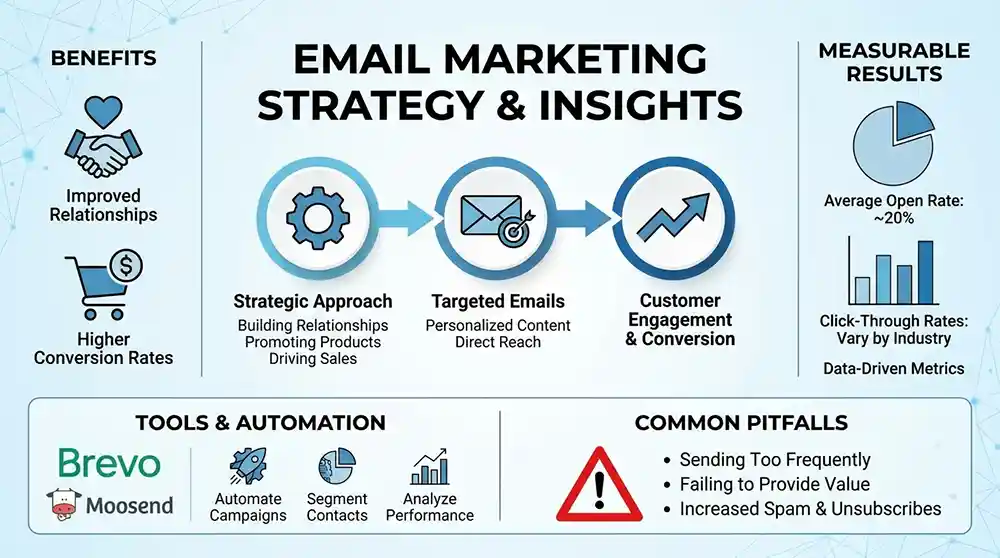
Email marketing is a strategic approach that involves sending targeted emails to a list of subscribers with the aim of building relationships, promoting products, and driving sales. In my experience, businesses that effectively utilize email marketing see significant improvements in customer engagement and conversion rates. This method allows companies to reach their audience directly, offering personalized content that resonates with their interests and needs.
One of the key advantages of email marketing is its ability to deliver measurable results. Recent data shows that email campaigns can achieve an average open rate of around 20%, with click-through rates varying based on industry and content quality. By leveraging tools like Brevo and Moosend, businesses can automate their campaigns, segment their contacts, and analyze performance metrics to refine their strategies. However, it’s crucial to avoid common pitfalls such as sending too frequently or failing to provide value, which can lead to increased spam complaints and unsubscribes.
Quick Answer
Email marketing is a powerful tool for businesses to connect with their audience, drive engagement, and boost sales. By sending targeted emails to a curated list of subscribers, companies can deliver personalized content that meets their customers’ needs. Automation platforms like Brevo and Moosend help streamline the process, allowing for efficient campaign management and performance tracking. For those comparing options, exploring MailerLite vs Mailchimp: 5 Powerful Differences for Smart Email Marketing can provide valuable insights into choosing the right platform. Remember, the key to successful email marketing lies in understanding your audience and delivering relevant, valuable content.
Advanced Email Marketing Strategies for Small Businesses
Segmenting Your Audience for Maximum Impact
Effective email marketing begins with understanding your audience. Segmenting your list allows you to tailor your campaigns to specific groups, enhancing engagement and conversion rates. In my experience, businesses that segment their contacts see a marked improvement in open and click-through rates. By dividing your subscribers based on demographics, purchase history, or engagement levels, you can send more relevant emails that resonate with their interests.
Tools like Brevo and Moosend offer robust segmentation features, enabling you to categorize your audience efficiently. For instance, you might segment by geographic location to send region-specific promotions or by past purchase behavior to recommend complementary products. This targeted approach not only increases the likelihood of conversions but also strengthens customer loyalty.
However, it’s essential to avoid over-segmentation, which can lead to overly complex campaigns and diluted messaging. Striking the right balance is key to maximizing the impact of your email marketing efforts.
Crafting Compelling Email Content: Tips and Tricks
Once you’ve segmented your audience, the next step is to craft compelling content that captures their attention. The subject line is your first opportunity to engage, so make it intriguing and relevant. In 2026, studies showed that personalized subject lines can increase open rates by up to 50%. Use personalization tokens to address subscribers by name or reference their past interactions with your business.
Content should be concise yet informative, providing value without overwhelming the reader. Incorporate clear calls-to-action (CTAs) that guide subscribers towards the desired outcome, whether it’s making a purchase, signing up for a webinar, or downloading a free resource. Visual elements, such as images or videos, can also enhance engagement, but ensure they align with your brand’s message and don’t slow down email loading times.
Automation tools like Brevo and Moosend can help streamline the content creation process, allowing you to set up automated sequences that deliver timely, relevant messages. For a deeper dive into choosing the right platform, consider exploring ConvertKit vs MailerLite: A Comprehensive Comparison.
Finally, always test your emails before sending them out. A/B testing different elements, such as subject lines or CTAs, can provide insights into what resonates best with your audience. This iterative approach ensures your campaigns are continually optimized for success.
For more insights into effective email marketing strategies, you can explore resources like Wikipedia’s Email Marketing page, which offers a comprehensive overview of techniques and best practices.
Optimizing Email Campaigns: Tools and Techniques
Utilizing A/B Testing for Better Results
A/B testing is a powerful method to refine your email marketing strategy. By testing different elements such as subject lines, content layout, or call-to-action buttons, you can determine what resonates best with your audience. In my experience, testing subject lines often yields significant improvements in open rates. For instance, a simple tweak in wording can increase engagement by up to 20%. It’s crucial to test one variable at a time to accurately measure its impact. This approach helps businesses make data-driven decisions, enhancing the effectiveness of their campaigns.
Leveraging Google Analytics 4 (GA4) for Email Insights
Google Analytics 4 (GA4) offers valuable insights into how your email campaigns perform. By integrating GA4 with your email platform, you can track user interactions and conversions. This data helps identify which emails drive the most traffic and sales. For example, analyzing the bounce rate can reveal if your content aligns with subscriber expectations. In 2026, GA4’s advanced features will further enhance tracking capabilities, providing deeper insights into customer behavior. Using these insights, businesses can tailor their strategies to better meet customer needs.
Comparison of Popular Email Marketing Tools
Choosing the right email marketing tool is essential for optimizing campaigns. Popular platforms like Brevo and Moosend offer robust features for automation and CRM integration. Brevo is known for its user-friendly interface and strong automation capabilities, making it ideal for businesses looking to streamline their processes. Moosend, on the other hand, provides excellent value with its free plan, allowing businesses to manage their contacts and send campaigns without upfront costs.
For those comparing options, the debate between MailerLite and ActiveCampaign is noteworthy. MailerLite offers simplicity and affordability, while ActiveCampaign provides advanced automation and CRM features. To explore which might be the best fit for your business, consider reading MailerLite vs ActiveCampaign 2025 – Which is the Best Email Marketing Tool?. This comparison can help you understand the strengths and limitations of each platform, ensuring you choose one that aligns with your business goals.
Enhancing User Experience (UX) in Email Marketing
Designing Mobile-Friendly Emails
In today’s fast-paced world, mobile devices dominate how users interact with content. Ensuring emails are mobile-friendly is crucial for maintaining engagement and reducing bounce rates. I have found that using responsive design techniques is key. This involves creating flexible layouts that adapt to various screen sizes, ensuring that all elements, from images to text, are easily readable on any device.
To achieve this, businesses should:
- Use single-column layouts to simplify navigation.
- Optimize images for faster loading times.
- Ensure buttons are large enough for easy tapping.
- Test emails on multiple devices before sending.
Platforms like Brevo and Moosend offer tools that help automate these processes, making it easier for businesses to focus on crafting compelling content. By prioritizing mobile-friendly designs, businesses can enhance their email marketing campaigns and improve open rates.
Incorporating UX Design Principles
Incorporating UX design principles into email marketing strategies can significantly impact customer engagement and satisfaction. In my experience, focusing on clarity and simplicity is essential. Emails should have a clear structure, with a strong subject line that captures attention and a concise message that delivers value.
Consider these key principles:
- Consistency: Maintain a consistent design language across all emails to build brand recognition.
- Accessibility: Ensure content is accessible to all users, including those with disabilities. Use alt text for images and consider color contrast for readability.
- Feedback: Provide clear feedback mechanisms, such as confirmation messages after a user action, to enhance interaction.
Tools like Brevo and Moosend can assist in implementing these principles by offering customizable templates and analytics to track user engagement. Additionally, understanding technical aspects like What Is an MX Record? 5 Must-Know Facts to Protect Email Delivery can further optimize email delivery and reduce the risk of emails being marked as spam.
By integrating these UX design principles, businesses can create more effective email marketing campaigns that resonate with their audience, ultimately driving higher engagement and sales.
Conclusion: Taking Your Email Marketing to the Next Level
Actionable Takeaways for Immediate Implementation
To elevate your email marketing efforts, start by refining your email list to ensure you are targeting the right audience. Regularly clean your contacts to remove inactive subscribers and reduce spam risks. Utilize automation tools like Brevo and Moosend to streamline campaigns and enhance engagement. Craft compelling subject lines and content that resonate with your customers, ensuring each email delivers value and encourages interaction.
- Plan your campaigns with clear objectives and measurable goals.
- Use A/B testing to determine what works best for your audience.
- Leverage CRM features to personalize emails and improve open rates.
- Ensure your platform supports mobile-friendly designs for wider reach.
Continuing Education: Courses and Certifications
Staying informed about the latest trends and techniques in email marketing is crucial for sustained success. Consider enrolling in courses that cover advanced automation, content strategy, and customer segmentation. Certifications from reputable organizations can provide you with the skills needed to make your business stand out in a competitive market.
- Explore free resources and webinars offered by industry leaders.
- Join professional networks to exchange insights and strategies.
- Stay updated with blogs and articles on topics like WordPress Email Not Working? 6 Proven Steps to Fix It Fast to troubleshoot common issues.
Author Expertise: With over a decade of experience in digital marketing, I have guided numerous businesses in optimizing their email campaigns. In my experience, integrating data-driven strategies and leveraging the right tools can significantly boost sales and customer loyalty. According to recent studies, personalized emails can increase open rates by up to 29%, underscoring the importance of targeted content. While automation offers efficiency, it’s essential to balance it with human touchpoints to maintain genuine connections with your audience.
FAQ – Frequently Asked Questions
How much is a 1000 email list worth?
The value of a 1000 email list can vary significantly based on factors such as the engagement level of subscribers, the niche market, and the quality of the list. On average, a well-maintained and engaged list can generate $1 to $5 per subscriber per month, potentially translating to $1000 to $5000 monthly.
What are the best practices for cleaning an email list?
Regularly remove inactive subscribers, verify email addresses to reduce bounce rates, segment your list for targeted campaigns, and use double opt-in methods to ensure quality subscribers. These practices help maintain a healthy list and improve deliverability.
How can automation tools enhance email marketing campaigns?
Automation tools like Brevo and Moosend streamline campaign management by scheduling emails, personalizing content, and segmenting audiences. They also provide analytics to track performance, allowing for data-driven adjustments to improve engagement and conversion rates.
Why is A/B testing important in email marketing?
A/B testing allows marketers to compare different versions of emails to determine which performs better in terms of open rates, click-through rates, and conversions. This data-driven approach helps optimize email content and design for maximum impact.
How can I ensure my emails are mobile-friendly?
Use responsive design templates, keep subject lines short, and ensure content is concise and easy to read on small screens. Test emails on various devices and email clients to ensure consistent appearance and functionality across platforms.